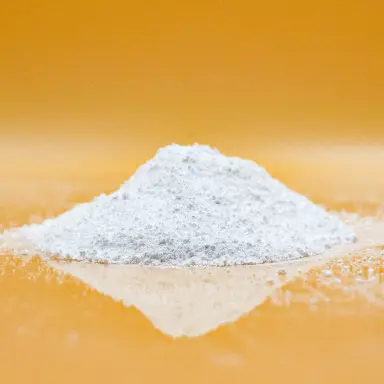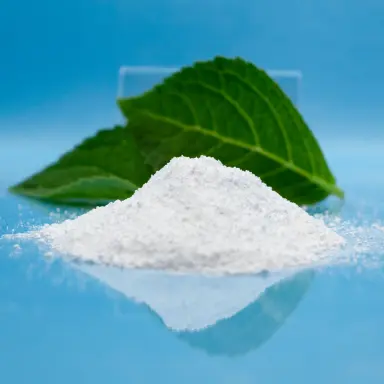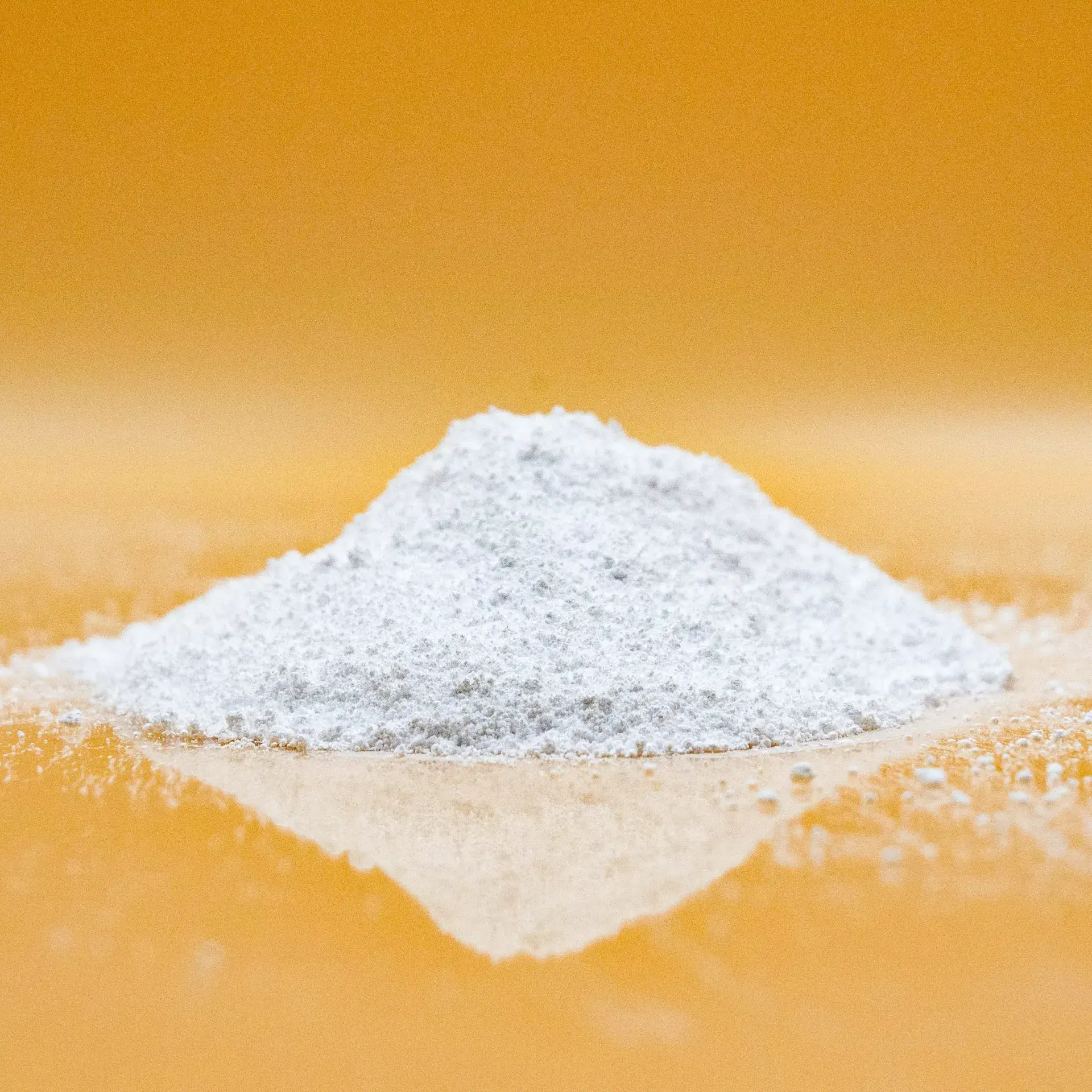
Light and heavy magnesium carbonate are both basic magnesium carbonate with the same specification. Light is fluffy and absorbent; heavy is dense and easier to handle in tablet production.
Both Are Basic Magnesium Carbonate
Our light and heavy magnesium carbonate powders, food grade and USP grade, are basic magnesium carbonate (magnesium carbonate hydroxide), 4MgCO₃·Mg(OH)₂·4H₂O, CAS 39409-82-0. In the EU the basic carbonate is E 504(ii).
"Magnesium carbonate" in trade is a family of compounds rather than one formula. Chemists write it as xMgCO₃·yMg(OH)₂·zH₂O, and the ratio of carbonate, hydroxide and water changes the crystal form and properties. The composition 4MgCO₃·Mg(OH)₂·4H₂O is the one found in the mineral hydromagnesite. The basic carbonate is white, practically insoluble in water and only slightly alkaline as a slurry.
How Basic Magnesium Carbonate Is Made
21 CFR 184.1425 describes two routes for food-use magnesium carbonate: adding an alkaline carbonate such as sodium carbonate to a magnesium sulfate solution, or carbonating a slurry of magnesium hydroxide and then boiling it.
How They Differ
- Light magnesium carbonate: fluffy, with a low bulk density and good absorbency, which helps it coat particles in powdered foods.
- Heavy magnesium carbonate: dense, with less dust, and easier to handle in tablet production.
As with magnesium oxide, light and heavy are trade names. Where a pharmacopoeia defines them, it uses a physical test rather than purity. The Japanese Pharmacopoeia, for example, calls magnesium carbonate heavy when it passes a settling test: a set weight is shaken in water and the sediment must stay below a marked line after 15 minutes. If your specification calls for light or heavy, name the standard it refers to.
Same Specification
Within a grade, our light and heavy powders have the same limits. Food grade: assay 40.0–43.5% as MgO, at least 98% through 80 mesh, lead ≤ 3 ppm, made to GB 25587-2010 and FCC. USP grade: the same assay range, at least 98% through 100 mesh, lead ≤ 1 ppm.
How to Choose
| Use | Usual Choice |
|---|---|
| Anticaking agent in salt and powdered foods | Light |
| Tablets and capsules | Heavy |
| Magnesium source in fortified foods and supplements | Either; choose by handling |
In the US, 21 CFR 184.1425 covers magnesium carbonate as an anticaking and free-flow agent, flour treating agent, lubricant and release agent, nutrient supplement, pH control agent, processing aid and synergist, at levels within current good manufacturing practice. JECFA lists the basic carbonate's functions as alkali, drying agent, color-retention agent, carrier and anticaking agent.
Why the Assay Is Given as MgO
The water content of basic magnesium carbonate varies; the EU specification and 21 CFR 184.1425 write the formula with 5H₂O, while our product pages use 4H₂O. Specifications therefore state the content as MgO, the residue left after strong heating.
On heating, basic magnesium carbonate first loses its water of crystallization at roughly 200–300 °C, then gives off carbon dioxide and the remaining water at roughly 350–480 °C, leaving magnesium oxide. By formula weight, the 4H₂O form leaves about 43.1% MgO and the 5H₂O form about 41.5%. Our specification range of 40.0–43.5% MgO covers both.
Our 40.0–43.5% MgO equals about 24–26% magnesium. To convert other figures, use the Magnesium Content Calculator.
Storage and Packing
Light and heavy powders are packed in 10, 15 or 25 kg bags: PP woven bags or kraft paper bags with a PE liner. Light powder takes up more volume per bag, so check the bag size against your storage and dosing equipment. Shelf life is 24 months in the original sealed bag.
What to Put in Your Specification
- Grade and standard: food grade to GB 25587-2010 and FCC, or USP grade.
- Light or heavy: and, if your market defines it, which standard the label follows.
- Fineness: 80 mesh for our food grade, 100 mesh for our USP grade.
- Lead limit: ≤ 3 ppm food grade, ≤ 1 ppm USP grade in our specifications.
Food grade specifications and order terms are on Food Grade Magnesium Carbonate. USP grade: USP Grade Light Magnesium Carbonate Powder and USP Grade Heavy Magnesium Carbonate Powder.