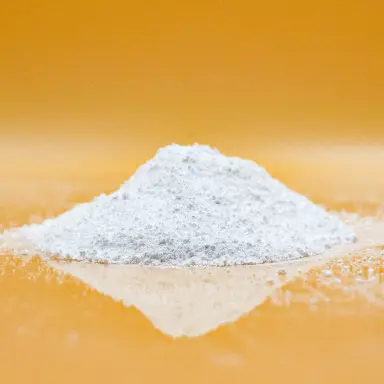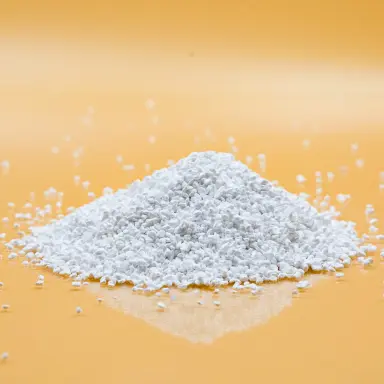
Food grade magnesium carbonate (basic magnesium carbonate, E 504) in light and heavy powder, made at our plant in Weifang, Shandong, to GB 25587-2010 and FCC. MOQ 1 metric ton, free samples, and TDS, COA and SDS for both powders.
Light or Heavy: Which Powder to Choose
Both powders are basic magnesium carbonate with the same specification: assay 40.0–43.5% as MgO and at least 98% through 80 mesh. They differ in bulk density.
- Food Grade Light Magnesium Carbonate Powder: fluffy, with a low bulk density and good absorbency, which helps it coat particles in powdered foods.
- Food Grade Heavy Magnesium Carbonate Powder: dense, with less dust, and easier to handle than the light powder.
More on the two forms: Light vs Heavy Magnesium Carbonate.
We also make Food Grade Magnesium Carbonate Granules; the specification sheet is sent on request.
Specifications
The table below is for the light powder, taken from our specification sheet. The heavy powder has the same limits. The COA for each batch reports the results.
Specifications: Food Grade Light Magnesium Carbonate Powder
| Item | Specification |
|---|---|
| Description | White powder |
| Identification | Positive test for magnesium |
| Assay (as MgO) | 40.0–43.5% |
| Acid-Insoluble Substances | ≤ 0.05% |
| Soluble Substances | ≤ 1.0% |
| Heavy Metals | ≤ 30 ppm |
| Arsenic (As) | ≤ 4 ppm |
| Lead (Pb) | ≤ 3 ppm |
| Calcium Oxide (CaO) | ≤ 0.45% |
| Iron (Fe) | ≤ 200 ppm |
| Fineness (Through 80 Mesh) | ≥ 98% |
| Total Aerobic Plate Count | < 1,000 cfu/g |
| Escherichia coli | < 3.0 MPN/g |
Standards and Regulatory Status
Our light and heavy powders are made to GB 25587-2010, the Chinese national food safety standard for magnesium carbonate, and to FCC.
- Identity: basic magnesium carbonate (magnesium carbonate hydroxide), 4MgCO₃·Mg(OH)₂·4H₂O, CAS 39409-82-0, EINECS 235-192-7.
- Food additive number: E 504 (magnesium carbonates) in the EU, where the basic carbonate is E 504(ii); INS 504(ii) in the Codex system.
- United States: 21 CFR 184.1425 affirms magnesium carbonate as GRAS for use as an anticaking and free-flow agent, flour treating agent, lubricant and release agent, nutrient supplement, pH control agent, processing aid and synergist, at levels within current good manufacturing practice.
- Assay as MgO: the water content of basic magnesium carbonate varies, and the EU specification and 21 CFR 184.1425 write the formula with 5H₂O. Specifications therefore state the content as MgO. Our 40.0–43.5% MgO equals about 24–26% magnesium; to convert other figures, use the Magnesium Content Calculator.
For pharmaceutical use, see USP Grade Light Magnesium Carbonate Powder and USP Grade Heavy Magnesium Carbonate Powder. All of our magnesium carbonate products are listed under Magnesium Carbonate.
Why the Specification Reads 40.0–43.5% MgO
On heating, basic magnesium carbonate first loses its water of crystallization at roughly 200–300 °C, then gives off carbon dioxide and the remaining water at roughly 350–480 °C, leaving magnesium oxide. By formula weight, the 4H₂O form leaves about 43.1% MgO and the 5H₂O form about 41.5%. Our range of 40.0–43.5% covers both, which is why the assay is given as MgO rather than as the carbonate.
Uses in Food
- Anticaking and flow agent: in table salt and powdered foods.
- Acidity regulator: adjusts pH in food products.
- Flour treatment agent: where local food additive rules allow it.
- Magnesium source: in fortified foods and supplements.
JECFA lists the functions of the basic carbonate as alkali, drying agent, color-retention agent, carrier and anticaking agent. Rules on where it may be used, and how much, differ by market; check them for your product.
Working With Basic Magnesium Carbonate
- Solubility: practically insoluble in water. It dissolves in dilute acids and gives off carbon dioxide as it does.
- Alkalinity: a slurry in water is slightly alkaline.
- Bulk: the light powder takes up much more space per kilogram than the heavy powder. Check the bag size against your storage and dosing equipment.
- Storage: keep bags sealed in a dry place. Shelf life is 24 months in the original sealed bag.
Documents, Packing and Ordering
- Documents: TDS, COA, SDS and specification sheet for the light and heavy powders, on each product page and in the Download Center. No login is needed. Each shipment comes with a COA.
- Packing: 10, 15 or 25 kg bags: PP woven bags or kraft paper bags with a PE liner. Neutral packing is standard; custom packing on request.
- Minimum order: 1 metric ton.
- Samples: free of charge.
- Payment: T/T or L/C.
- Lead time: confirmed with each quotation.
- Shelf life: 24 months in the original sealed bag.
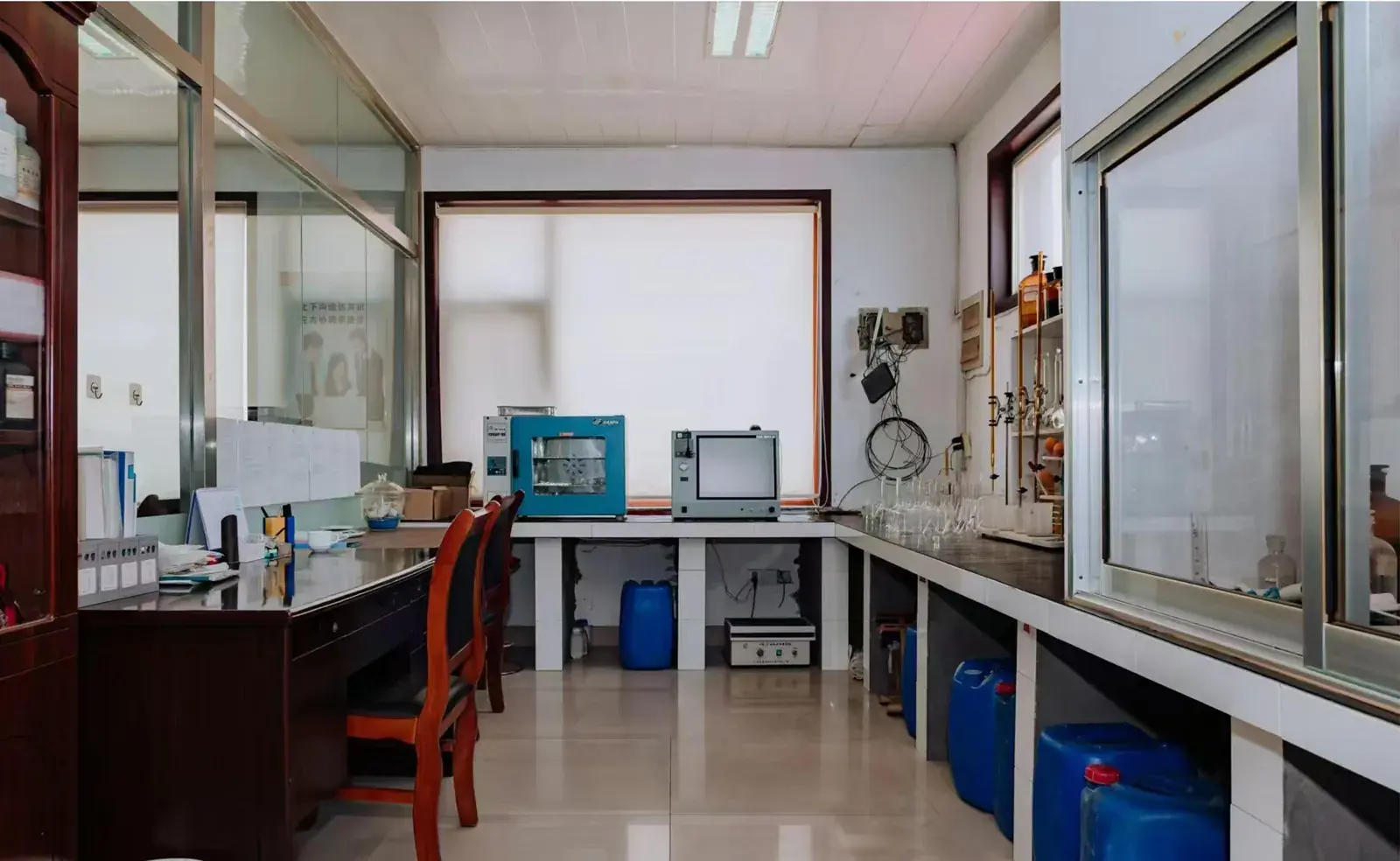
Every batch is tested in the plant lab before packing; see Quality Control & Documentation and Our Factory.
What to Send With Your Inquiry
- Form: light or heavy powder, or granules
- Quantity per shipment and expected annual volume
- Destination port and bag size
- The standard your market requires, and any limits that differ from our specification
We check your requirements against our specification before we quote.