A certificate of analysis (COA) reports the test results for one batch against a specification. This is what each line on a magnesium oxide COA means and what to check when a shipment arrives.
COA, Specification Sheet and TDS
- Specification sheet: the tests and limits the product is made to.
- COA: the results for one batch, against those limits.
- TDS: a general description of the product, its properties and uses.
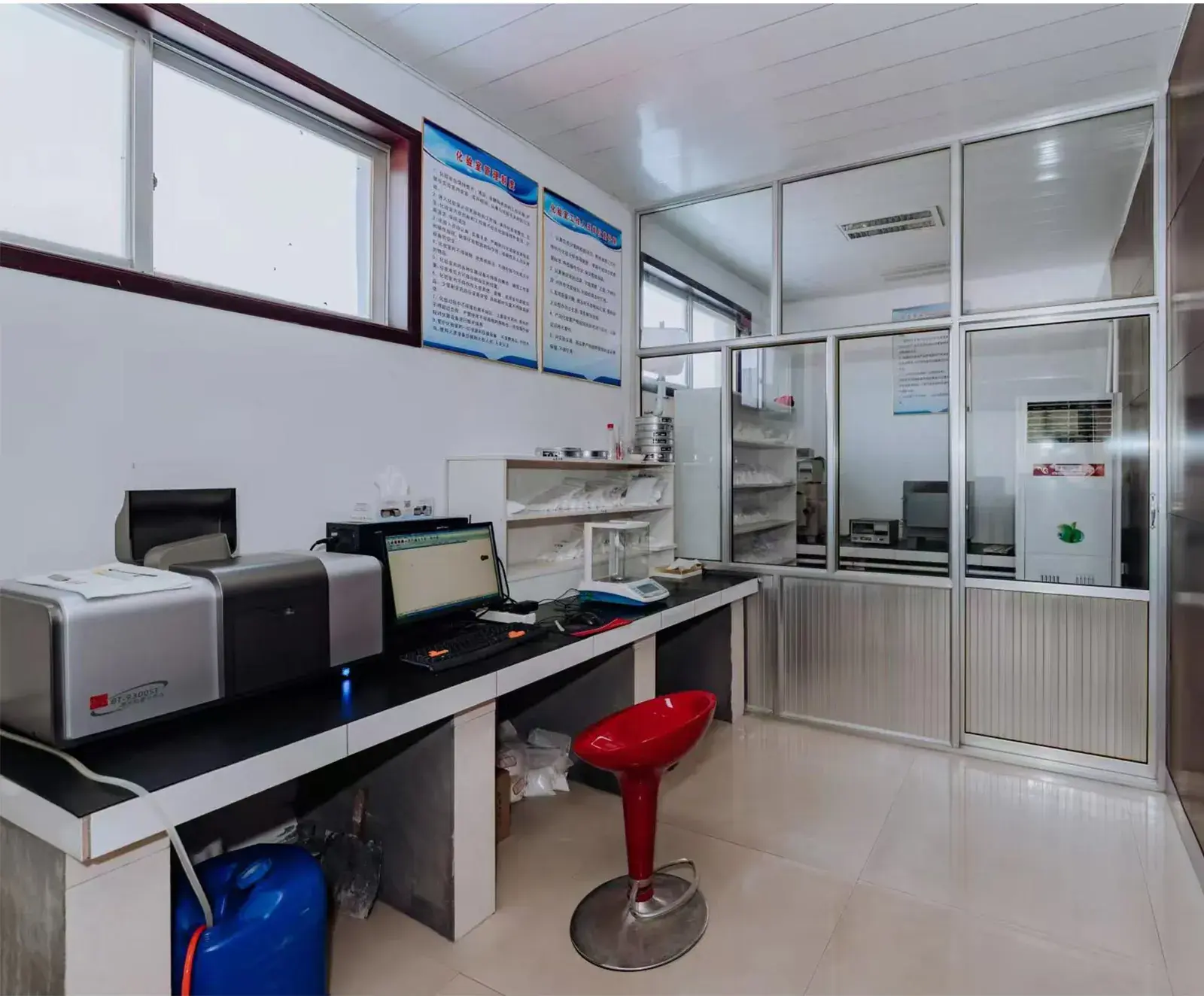
Each shipment from us comes with a COA. The TDS, SDS and specification sheet for each product can be downloaded from its product page and the Download Center. Every batch is tested in our plant lab before packing.
Check the Header First
- The product name and grade match your order.
- The batch number on the COA matches the bags you received.
- The dates fit the shelf life. Ours is 24 months in the original sealed bag.
What Each Test Means
| Test | What It Tells You |
|---|---|
| Assay (as MgO) | MgO content, on the basis stated on the certificate |
| Loss on Ignition | Weight lost on strong heating, mainly moisture and carbon dioxide picked up from the air |
| Acid-Insoluble Substances | Residue that does not dissolve in dilute hydrochloric acid, such as silica |
| Soluble Salts | Water-soluble matter left in the product; USP lists it as free alkali and soluble salts |
| Calcium | Calcium carried over from raw materials |
| Heavy Metals | Metals such as lead, reported together as one total |
| Lead, Arsenic, Cadmium, Mercury | Individual limits for each element, listed on food grade specifications |
| Iron | Iron content, which can affect color |
| Particle Size, Whiteness | Physical properties, listed on food grade specifications |
| Microbiological Tests | Plate count, molds and yeasts, E. coli and Salmonella, listed on food grade specifications |
The Basis of the Assay
An assay result means little without its basis. Standards calculate content on the sample as received, on the dried sample, or on the sample after ignition. Magnesium oxide picks up water and carbon dioxide, so the same powder gives a higher MgO figure on the ignited basis than on the as-received basis. JECFA's food additive specification, for example, sets its MgO assay after ignition at about 800 °C.
When you compare a COA with your specification, or two suppliers' COAs with each other, check that the assays use the same basis. If they do not, the numbers cannot be compared directly.
Loss on Ignition and Loss on Drying
These two tests are often confused:
- Loss on drying heats the sample at about 105 °C and measures free moisture.
- Loss on ignition heats it to about 800 °C, which also drives off carbon dioxide and the water held as hydroxide.
For magnesium oxide, loss on ignition shows how much moisture and carbon dioxide the powder has taken up since it was made. Our food grade and USP grade limit is ≤ 10.0%. If your own test later shows a higher figure than the COA, check how the bags were stored, since opened or damaged bags let the powder take up moisture and carbon dioxide.
Reading the Units
- ppm and mg/kg are the same unit. % is 10,000 times larger, so 0.002% equals 20 ppm. Our calcium chloride specification, for example, writes heavy metals as ≤ 0.002%, which is ≤ 20 ppm.
- cfu/g means colony-forming units per gram. "< 1,000 cfu/g" for total plate count means fewer than 1,000 colonies grew from each gram tested.
- MPN/g means most probable number per gram, a statistical count used for E. coli in some specifications.
- Not detectable or negative results for E. coli and Salmonella refer to a stated sample amount, such as per gram or per 25 g. Check the amount if your market sets one.
Limits Depend on the Standard
The same test can carry a different limit under different standards, and a USP COA does not list the same tests as a food grade COA. Compare the results with the specification you ordered to. For our limits, see the specification tables on Food Grade Magnesium Oxide and USP Magnesium Oxide.
COAs for Other Magnesium and Calcium Salts
The same method works for our other products. What changes is how the main content is reported:
| Product | Assay Reported As | Point to Check |
|---|---|---|
| Magnesium hydroxide | Mg(OH)₂, 98.0–100.5% | Loss on ignition is a range, 30.0–32.5%; a result below it is also out of spec |
| Basic magnesium carbonate | MgO, 40.0–43.5% | The assay is the oxide left after heating, not the carbonate |
| Magnesium chloride hexahydrate | MgCl₂, ≥ 46.4% | Sulfate, ammonium and color (Hazen) are listed |
| Calcium chloride | CaCl₂, ≥ 93% or ≥ 77% | The minimum depends on anhydrous or dihydrate |
Points to Check
- Every result is within its limit. Compare each result with the limit printed next to it.
- Limits and typical values: bulk density is usually given as a typical value, not a limit.
- Storage: magnesium oxide picks up moisture and carbon dioxide from the air, so loss on ignition can rise in opened bags. Keep bags sealed until use.
- Anything missing or unclear: if a test your specification requires is not on the COA, or a result is outside its limit, ask the supplier before you use the batch.