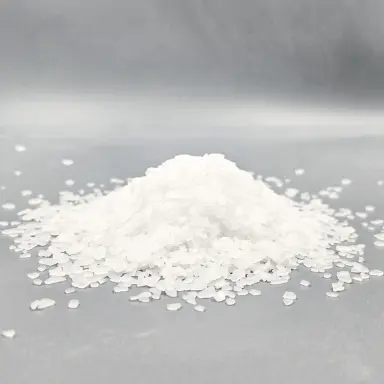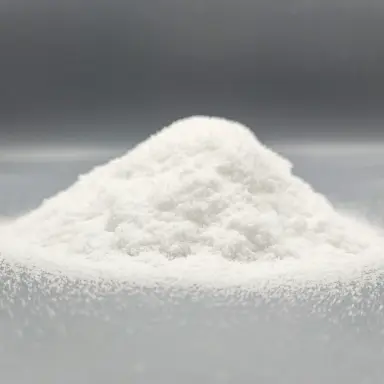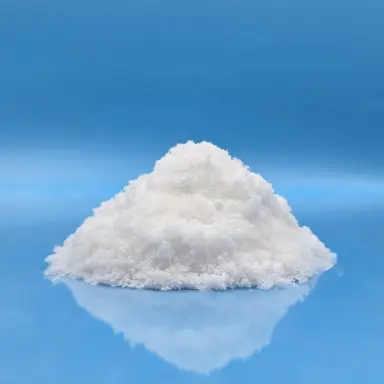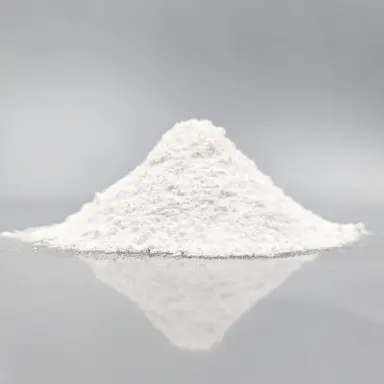
Food grade magnesium chloride hexahydrate (E 511) as flakes, granules and granular powder, and anhydrous magnesium chloride powder, made at our plant in Weifang, Shandong. Sold by the metric ton: MOQ 1 metric ton, free samples, and TDS, COA and SDS for every form.
Flakes, Granules, Powder or Anhydrous: Which Form to Choose
The three hexahydrate forms share one specification and differ in how they handle and dissolve. Anhydrous magnesium chloride has no water of crystallization, so each metric ton carries about twice as much MgCl₂.
| Form | MgCl₂ | Handling |
|---|---|---|
| Hexahydrate Flakes | ≥ 46.4% | Flow well and cake less in storage than powder |
| Hexahydrate Granules | ≥ 46.4% | Flow well in automatic dosing; little dust |
| Hexahydrate Granular Powder | ≥ 46.4% | Dissolves fastest of the three hexahydrate forms |
| Anhydrous Powder | ≥ 98% | Gives off heat as it dissolves; add it to water gradually |
Magnesium Chloride Hexahydrate
Magnesium chloride hexahydrate, MgCl₂·6H₂O (CAS 7791-18-6, EINECS 232-094-6, molecular weight 203.30), is the form most food and bath products use. It contains about 46.8% MgCl₂; our specification minimum is 46.4%. It is strongly hygroscopic, so keep bags sealed in a dry place and close part-used bags.
The table below is for the flakes, taken from our specification sheet. The granules and granular powder have the same limits. The COA for each batch reports the results.
Specifications: Food Grade Magnesium Chloride Hexahydrate Flakes
| Item | Specification |
|---|---|
| Color | White |
| Form | Flakes or granular crystals |
| Magnesium Chloride (MgCl₂) | ≥ 46.4% |
| Calcium (Ca) | ≤ 0.10% |
| Sulfate (SO₄) | ≤ 0.40% |
| Water-Insoluble Matter | ≤ 0.10% |
| Color (Hazen) | ≤ 30 |
| Lead (Pb) | ≤ 1 mg/kg |
| Arsenic (As) | ≤ 0.5 mg/kg |
| Ammonium (NH₄) | ≤ 50 mg/kg |
Anhydrous Magnesium Chloride
Food Grade Anhydrous Magnesium Chloride Powder (MgCl₂, CAS 7786-30-3, molecular weight 95.21) is a white powder with MgCl₂ ≥ 98%, Mg ≥ 25.0% and water ≤ 2%. One metric ton carries about as much MgCl₂ as 2.1 metric tons of hexahydrate, which lowers freight and storage cost per unit of MgCl₂. If a recipe calls for 1 kg of hexahydrate, about 0.47 kg of anhydrous powder gives the same MgCl₂, with about 0.53 kg less water. It is used where added water is unwanted; see Magnesium Chloride Hexahydrate vs Anhydrous. To compare magnesium content across compounds, use the Magnesium Content Calculator.
Standards and Regulatory Status
- Hexahydrate standard: our flakes, granules and granular powder are made to GB 25584-2010, the Chinese national food safety standard for magnesium chloride, and to FCC.
- Food additive number: magnesium chloride is E 511 in the EU and INS 511 in the Codex system.
- HS code: 2827.31 for all four forms.
- United States: 21 CFR 184.1426 affirms magnesium chloride hexahydrate as GRAS for use as a flavoring agent and adjuvant and as a nutrient supplement, at levels within current good manufacturing practice.
- EU safety review: in its 2019 re-evaluation of chloride food additives, including E 511, EFSA found no safety concern at the reported uses.
- Anhydrous form: the JECFA and EU food additive specifications cover the hexahydrate only. Our anhydrous powder is supplied to our own product specification.
All four forms are listed under Magnesium Chloride.
Uses
- Tofu and soy products: protein coagulant, the traditional nigari.
- Food additive: firming agent and magnesium source in fortified foods and supplements.
- Bath salts and personal care: magnesium flakes for baths and foot soaks.
For Tofu Makers
Magnesium chloride is very soluble, so it sets soy milk quickly. Food science reviews note that coagulation that is too fast can give tofu that holds less water and has a coarser texture, and that the best level depends on the soybean and the process. Trial the coagulant with your own soy milk before you fix a dose. The granular powder dissolves fastest; flakes and granules store better. More detail: Magnesium Chloride Hexahydrate vs Anhydrous.
Storage
Magnesium chloride takes water from the air. A US Forest Service guide gives about 32% relative humidity as the point above which it starts to absorb moisture, so keep every form sealed until use and close part-used bags. The fine granular powder picks up moisture faster than flakes or granules.
Documents, Packing and Ordering
- Documents: TDS, COA, SDS and specification sheet for each form, on each product page and in the Download Center. No login is needed. Each shipment comes with a COA.
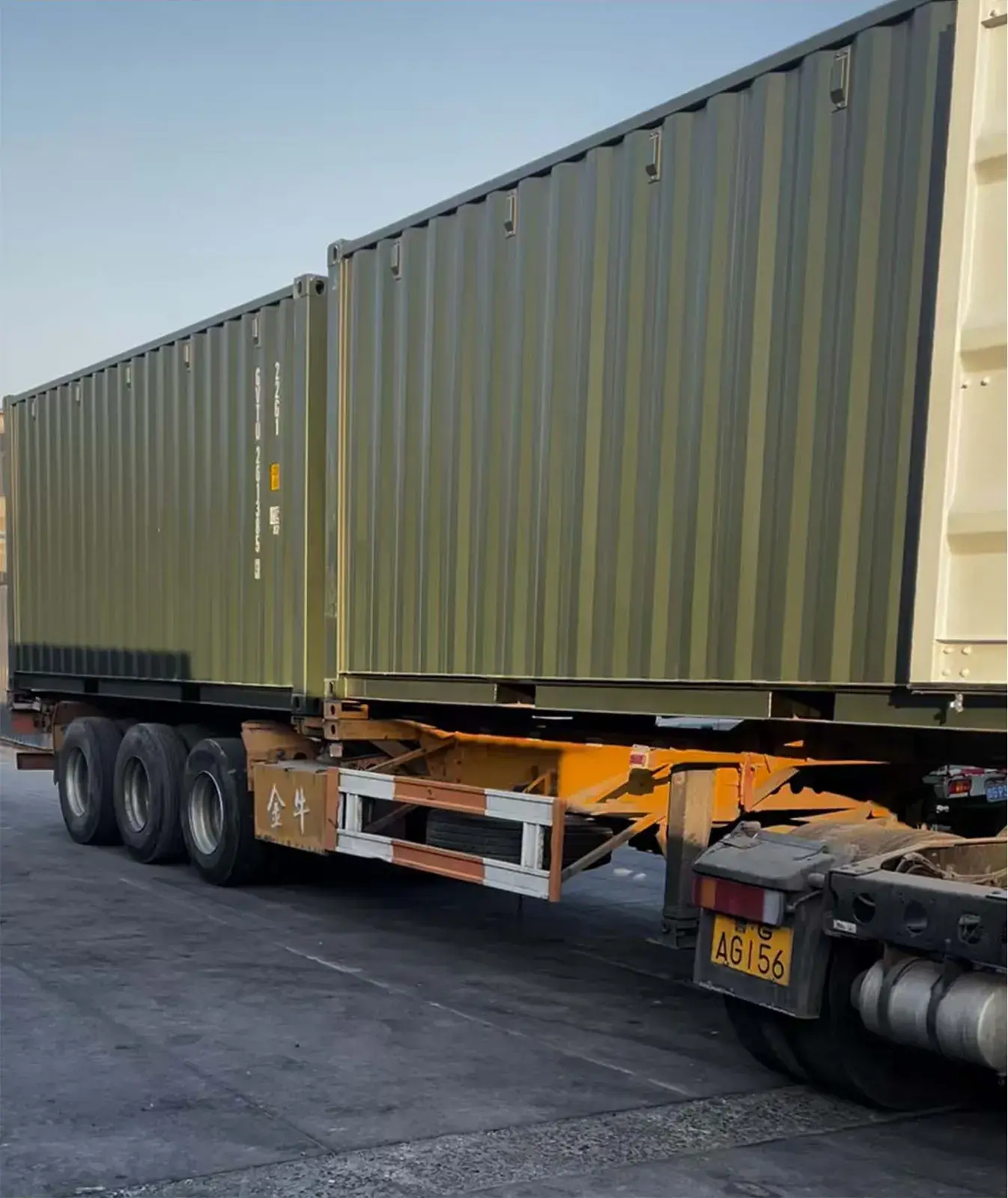
- Packing: 10, 15 or 25 kg bags: PP woven bags or kraft paper bags with a PE liner. Neutral packing is standard; custom packing on request.
- Minimum order: 1 metric ton.
- Samples: free of charge.
- Payment: T/T or L/C.
- Lead time: confirmed with each quotation.
- Shelf life: 24 months in the original sealed bag.
Every batch is tested in the plant lab before packing; see Quality Control & Documentation and Our Factory.
What to Send With Your Inquiry
- Form: flakes, granules, granular powder or anhydrous powder
- Quantity per shipment and expected annual volume
- Destination port and bag size
- Your use, for example tofu, food fortification or bath products
To compare offers for different forms, divide each price per metric ton by its MgCl₂ content; see Magnesium Oxide Price per Ton for how quotes are built.